UPS Black Friday Surprise

May 21, 2014: UPS announced it will implement full ground and air service on the Friday after Thanksgiving even though Black Friday is a holiday under the contract.

UPS has always suspended ground deliveries on Black Friday, with Teamsters getting premium pay to do air pickups and deliveries. But this year, UPS plans to have full ground service too, according to a memo that is being read by UPS management at morning meetings called PCMs.

“We were totally, blindsided,” said Kathy Duffy, a driver from Local 384 in Willow Grove, Pa. “We’ve been fighting for more time with our families. This is the only quality family holiday that a lot of UPSers get because we’re all so exhausted at Christmas.”

UPS management says they’re implementing the change to “help clear the UPS system and prepare us for the first wave” of holiday season peak volume. 

“This is a total over-reaction to what happened last year. All UPS has to do is hire more people. Instead, it’s like we’re losing a holiday,” Duffy said.

Under nearly every supplement and rider, UPS can force employees to work on a holiday if there are not enough volunteers (with the Local 804 Supplement is a notable exception).

Pay for Teamsters who work the holiday is governed by your supplement or rider. In some supplements, Teamsters who work the holiday get double-time with an eight-hour minimum, plus eight hours of holiday pay. In other supplements, it is time-and-a-half plus the holiday pay.

Ken Hall and the IBT just issued a press release bragging UPS will have to cut down excessive overtime and deal with “embarrassing staffing shortages during the last holiday season” by hiring more drivers.

Apparently UPS management has other ideas.

Another Contract Loophole Exposed

UPS made $4.5 billion in profits last year. So why will some package car drivers make less than new hires under the new contract?

Starting pay under the new contract was raised for package drivers to $18.75 an hour. But incredibly, Hall is allowing UPS to continue to pay a lower rate to more senior drivers who were making less under the old contract.

Depending on where they fall in the progression, package car drivers will make 30¢ an hour less than drivers hired a year or more after them thanks to this pro-company loophole in the new contract.

New Package Drivers get screwed under the contract too. It now takes four years to get to top pay, instead of three.

Before the contract, Hall vowed, “We’re not going to be talking about concessions, we’re going to be talking about improvements.” But actions and results speak louder than words.

The pay rate for Package Drivers who were in the progression as of last August 1 is spelled out in this chart from the IBT.

UPS Teamsters: Cash in With $50 Retro Check Discount

Retro checks are on the way May 27. Put that extra cash to work for you.

Register to attend your first TDU Convention and get a $50 discount. This limited-time offer expires on June 15. The discount is available to first-time TDU Convention attendees only.

The TDU Convention will be held November 7-9 in Cleveland.

The discounted registration rate of $175 covers most meals and all Convention workshops and materials. Hotel rooms at the Cleveland Airport Sheraton are also discounted: just $89/night for a single and $45/night for a shared room.

Click here to register and save $50 today.

Download the Docket for the UPS National Grievance Panel

The next UPS National Grievance Panel will be held June 2-5, 2014 in Boston. TDU is making the complete list of the cases to be heard at the panel available to concerned Teamsters.

Click here to download the cases before the National Grievance Committee.

Click here to download the cases before the Joint National Air Committee.
TDU


What a thoughtful company

125336423_BG2

ANDERSON, SC (FOX Carolina) –

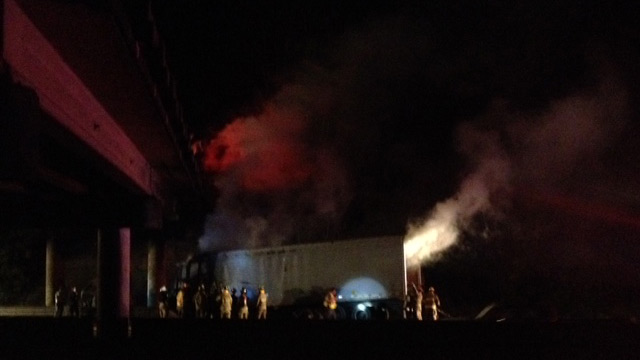
Crews cleared the scene of a fiery crash along Interstate 85 northbound after an 18-wheeler wrecked into an overpass at mile marker 30 on Thursday night.

Anderson County fire officials said a UPS truck hit the bridge that crosses over Cherokee Road and caught fire.

The driver and a passenger from Illinois were pulled from the truck and taken by EMS to Greenville Hospital, officials said. Their condition is unknown at this time.

Lance Cpl. Gary Miller said a tire malfunction caused the tractor trailer to run off the side of the road.

UPS released the following statement about the accident on Friday:

At UPS, our concern is for the health and recovery of our two drivers. UPS continues to cooperate with the investigating authorities. We are also in the process of assessing the extent of the damage to packages on the tractor trailer. UPS is contacting customers whose packages were damaged or destroyed and we will make them whole.

New Summary Plan Descriptions Mailed to Retirees

After being reassured that the Retirees Health plan remained unchanged, all of the retirees are being sent a new summary plan description which drastically alters coverages and costs to retirees.
Just an example of those changes is the prescription coverages. Where many of our prescriptions were covered at 100%, now we will pay 20% of the cost. Additionally, where many of us were on a 90%-10% plan, we are now being reduced to an 80%-20% plan. Another huge increase in costs.
The biggest, most devastating cost though is the inclusion of a $200 per person, $400 family deductible. Many of the current plans did not include a deductible.
These are the most glaring changes in the Summary Plan Description. The worst part is that most of the retirees I know, that retired before the contract negotiations, were led to believe that our healthcare package would remain unchanged.
The consistent story in these negotiations seems to be the Internationals secrecy in negotiating on our behalf.
Here’s another example!

His Passport Took a Two-Year Vacation (Without Him)

11HAGGLER-master675

It’s been a little over two years since the Haggler’s passport vanished. Longtime readers may recall the particulars: While visiting Stanford University, the Haggler had his passport shipped from Manhattan overnight via United Parcel Service, for a quick and unscheduled trip to Canada. Days passed, and no passport arrived. Calls were made. Facilities were searched. More calls were made. More facilities were searched.

The document was never seen again. Poof. It had vanished

“Wait just a minute,” the Haggler can hear readers exclaim incredulously. “What about the law of conservation of mass, as stated by the 18th-century French chemist Antoine Lavoisier, which holds that mass can neither be created nor destroyed?”

Well played, readers! Here’s the thing: That law was discovered long before U.P.S. was founded. Seriously, if U.P.S. had been around in the age of Lavoisier, the guy would never have called it “the law of conservation of mass.” It would be more like “a suggestion” or “a guiding principle with a glaring exception.” Because U.P.S. has the ability to make mass evaporate.

Or so it seemed. A few weeks ago, a woman at Stanford called with some remarkable news.

“Your passport just arrived here,” she said.

Well, well. The Haggler speculated about what this document had been up to, lo these many months. Perhaps it had been flying around the world, getting stamped in exotic countries. But the truth was mundane.

“We traced it to a pickup point of a U.P.S. letter drop box by an office building in Westbury on Long Island,” wrote Susan Rosenberg, a U.P.S. spokeswoman.

That’s right: The package was placed in a U.P.S. drop box on Long Island. And apparently it looked precisely the way it did when it was initially mailed. Nothing out of the ordinary, except for its two-year absence from the U.P.S. system.

So what happened here? How did this package wind up in Westbury, and where had it been languishing? U.P.S. could offer only theories.

The first, Ms. Rosenberg said, was that a U.P.S. driver had somehow mixed up that package with shipping supplies that were then dropped off at some company on Long Island.

“Our drivers deliver a lot of supplies,” she explained in a phone interview, “and the conjecture is that somehow, your express envelope got put together with supplies and delivered to another building, in a bundle of supplies. Somebody who works in Westbury must have eventually looked at the envelope and realized, ‘Oh, this has a label on it.’ ”

And into the drop box it went, then off to Stanford.

Ms. Rosenberg emphasized that this was just a theory. It appeared to be the best that a U.P.S. brain trust of wayward-package theorizers could conceive.

But one wonders: Wouldn’t a package that had been out of the U.P.S. system for more than two years raise a red flag as it re-entered the system? Wouldn’t a scanning device bleep and deliver a “Huh?” kind of noise?

Not necessarily, Ms. Rosenberg said. The package was lost so long that it had effectively aged out of the system. Which apparently means that it was treated like a brand new package.

Continue reading the main story

Continue reading the main story
Advertisement

As the Haggler was trying to fathom all this, “Planet Money” — the consistently outstanding NPR podcast about all things economic — did a show called “The Future of Work Looks Like a U.P.S. Truck.” It was about the almost alarming number of ways that U.P.S. tracks its drivers and their trucks. The vehicles are studded with sensors so that the company can keep track of just about everything — when a driver opens and closes the truck’s door, starts the truck, turns off the truck, puts on a seatbelt. The company even keeps tabs on when a driver puts a truck in reverse, and for how long.

All of this data is sent to Paramus, N.J., where it is sifted by engineers on an endless quest to shave seconds off of delivery and pickup times.

This focus on time has yielded results. A driver told “Planet Money” that years ago he could handle 90 deliveries a day. Now he can handle 120.

The Haggler listened in a state of bemused stupefaction. This company can tell how much time a truck spent, each day, going backward, but it can lose a package? And when that package reappears, it can offer only educated guesses about its journey?

When the Haggler emailed these sentiments to Ms. Rosenberg, she thanked the Haggler for his kind words about U.P.S.’s technological achievements, which are truly impressive. Then she said the company had a new theory about that lost-and-found passport.

“We now believe that it didn’t go beyond its initial pickup,” she wrote, “possibly being mishandled by the driver before he or she ever made it back to the delivery center to move through other scanning and transit.”

Hmm. Then how did it get to Long Island? As the Haggler pondered that one, he realized that the “Planet Money” podcast was all about streamlining the routes of drivers. Maybe when the company is done with that effort, it can fail-safe the system of package-tracking, so that passports don’t disappear.

That work may not save the company millions of dollars a year, and it probably won’t reduce the amount of time that U.P.S. trucks spend in reverse. But it would be progress.

EMAIL: haggler@nytimes.com. Keep it brief and family-friendly, include your hometown and go easy on the caps-lock key. Letters may be edited for clarity and length.

Stewards Do the Math

I wrote this back when I was making $25 an hour. When you plug in your current wage rate, your argument becomes even stronger. Try it.

Have you ever gone into the office to represent a driver and had your manager whip out the calculator and start pounding in numbers. He’ll say this poor slob of a driver is not using the methods and he’s not keeping his nose to the grindstone and he’s costing the center money instead of making the center money. The manager will have a stack of reports to back up his claim: the WOR showing the driver is over allowed; Sparky, showing which stops the driver wastes time at; previous OJS rides showing demonstrated levels of performance and so on. But the ultimate hammer is the calculator. If the guy is 2 hours over and that’s at the OT rate of $38.02, then he’s literally stealing $76.04 from the company every day. That’s $380.20 per week. Or almost $2000 a year. If 50,000 drivers did this, that’s……oh my God, all the profit the company makes!! We can’t afford to have you around, you’re going to bring down the whole company! This justifies a 3 day ride and all future harassment…just look at these numbers!
But there is some math that managers never do. How about these numbers. Let’s say this poor slob of a driver comes in every day and spends just 15 minutes in his car before his start time looking for misloads and checking out his Next Day Air. That’s 15 minutes he doesn’t have on the end of his day where it would be paid at the OT rate. That’s one and a quarter hours per week at $38.02 or $47.53. Or almost $250 a year. If the guy works 25 years, he has given the company $6178 in free labor by looking over his load every morning for just 15 minutes.
Let’s say he also skips his lunch. That’s 5 hours a week at $38.02, or $190.10 a week. That’s $10,000 a year that the company gets in free labor. Let’s say 20,000 drivers are skipping their lunch everyday. That’s $200,000,000 a year in free labor that UPS is getting. Then there is the tax saving for them because they don’t have to pay Federal or State tax on that amount. The savings to UPS are huge.
But managers never do that math in the office. Stewards need to do that math and have it written in the back of their contract book so they can quote it. We can crunch numbers just as well as they can. Fight fire with fire.


UPS and the “Package King”


United Parcel Service is one of the most recognized brands in the world of corporations. But the company’s image has been meticulously created. Once you pierce the brown wall of propaganda, what’s behind isn’t pretty–as union workers, mainly members of the International Brotherhood of Teamsters, at the company’s 1,900 U.S. facilities know well.
In this first article in an occasional series on the history of United Parcel Service and workers’ resistance to Big Brown, Joe Allen examines the company’s founder James E. Casey–the so-called “Package King”–whose personality and polices still shape UPS to this very day.


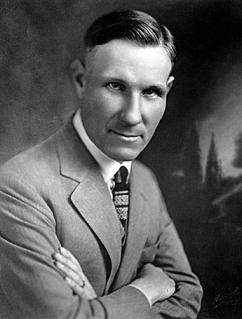
UPS founder James CaseyUPS founder James Casey

“Deft fingers wrapping thousands of bundles…What a treat! Ah, packages!”
— James E. Casey

THERE ARE few other things in life that get a UPS supervisor or manager more excited than the sight of thousands of packages or Next Day Air envelopes careening down the myriad of belts crisscrossing the company’s sorting and distribution centers–known as “hubs” in the company lingo–across the world.
Their eyes widen and their breath quickens. You can almost see the dollars signs popping up in their eyes, like old-fashioned cash registers, as each package passes by. These packages of every shape and size are like little nuggets of gold, from which the UPS fortune is made.
They are more important than the physical and mental health of the workers who sort, load, unload, repair, clerk and deliver them. UPS includes in its corporate “mission” statement noble-sounding words like “service” and “integrity”–as if the company is most concerned with promoting the common good. But Big Brown is, after all, first and foremost in the business of making money off of its workers.
The obsession with packages goes right back to the company’s hallowed founder, James E. Casey. “Casey once told me that he had never drunk a glass of milk in his life,” the head of a department store told a reporter for The New Yorker for a 1947 story, “and I thought for a minute, he might stop talking about those goddamn packages and tell me why he never drunk a glass of milk. But no! He went right into night loading operations in Chicago.” Clearly, Casey wasn’t much of a conversationalist.
On another occasion, Casey, while visiting a client’s store, dropped into the wrapping room and was reportedly ecstatic at the sight: “Casey’s eyes sparkled, and he began to twitch. ‘Deft fingers!’ he said. ‘Deft fingers wrapping thousands of bundles. Neatly tied. Neatly addressed! Stuffed with soft tissue paper! What a treat! Ah, packages!'”
– – – – – – – – – – – – – – – –
WHAT SPARKED the interest of The New Yorker about Jim Casey and UPS in this post-Second World War era? It appears to have been a messy, wildcat strike on the streets of Manhattan that shut down UPS operations for 51 days in the fall of 1946. (More on this later.)
Those were the days when UPS did home deliveries for New York City’s leading department stores, such as Lord & Taylor. Customers would buy their items, and the department store would package and wrap them, then hand them over to UPS for home delivery. The strike prevented New York’s middle- and upper-class shoppers from getting their goods, which seems to have the eye of the editors at the New Yorker.
Philip Hamburger–who would stay at the New Yorker for a total of six and a half decades–was assigned to go interview Casey and get a feel for the company that had become so indispensable to New York City’s retail businesses.
The company was already a third of a century old by this point. A 19-year-old Casey founded UPS in 1907 as a bicycle messenger service in Seattle. In 1913, it started to deliver packages, and over the next decade, the company spread down the West Coast.
By 1934, Casey was important enough to be featured in the “Talk of the Town” section of the New Yorker. The editors gave the story the distinctly condescending title of “Errand Boy.” It was a short article that acknowledged Casey had begun his career doing “errands,” but his business had changed considerably: “He’s sort of an errand king now, the head of the United Parcel Service, which delivers packages by the millions in this city and elsewhere.”
The article, by an unnamed author, picked up on company policies that struck many people then (and now) as military or even cult-like: “The employees are about as regimented a bunch of people as you’ve ever heard of. For his first few weeks, he is tutored in driving, delivery and courtesy. This involves a hundred and thirty-eight rules.”
The story goes on to mention a summer camp: “When business is slack, the unmarried deliveryman may spend their time at a camp in Connecticut which the company operates for them. Several hundred go there every year for a month or two.” What went on in these summer camps may be lost to history, but they were clearly about creating a private world, where employees were strongly encouraged to adopt the values of Jim Casey.
By the time Philip Hamburger interviewed Casey following the Second World War, Casey’s stature in New York had made a big leap forward. Reflecting this, he was bumped up to the “Profiles” section of The New Yorker, usually reserved for major figures of the business and political world.
Casey was no longer a new face in town–he was the head of a major business, and a growing one. Late in 1946, UPS delivered its one-billionth package. In 1947, it employed 2,800 people and operated 1,700 trucks in New York City alone. It was operating in 17 major cities across the U.S. and delivering 100 million packages a year.
– – – – – – – – – – – – – – – –
WHAT MAKES Hamburger’s profile of Casey so interesting seven decades later is that it gives an unvarnished look at the man, as opposed to the manufactured legend familiar to UPSers today. Casey comes across as an austere disciplinarian with a more than slightly loopy fascination with packages.
“Casey is a tall, spare man of 59, with high cheekbones and, most of the time, a rigidly detached expression,” reported Hamburger. He found Casey hard to interview, describing him as a “taciturn”–what most of us would call dour–who was reluctant to answer questions.
However, when reporter and interviewee moved from Casey’s fourth floor office at the old Manhattan hub on First Avenue to view the endlessly moving belts of the package sorting system below, Casey perked up. “He becomes animated in the presence of packages.” Hamburger described the “surf-like rumble of the parcels” filling the air–something that anybody who has spent any time in a UPS hub will recognize to this day.
“Casey’s life is devoted almost entirely to packages,” Hamburger reported, though this vocation was combined with a deliberate faux modesty about it all–“Anybody can deliver a package,” Casey told Hamburger. But Hamburger wasn’t buying the line–“He does not believe it,” the reporter wrote.
Hamburger picked up on the way Casey packaged UPS’s image, just like the neat and tidy packages his drivers picked up at fashionable New York department stores, and that so delighted Casey. “Over the years,” Hamburger wrote, “Casey has taken what might look like to outsiders like the simple job of handling and delivering packages and turned it into a semi-religious rite.”
A “simple job” is an overstatement, but “turning it into a semi-religious rite” is right on the money. Every aspect of the company image was carefully created, from the crisply pressed brown uniforms to the company slogan “Safe, Swift, Sure.” The mystique of the UPS driver was an important selling point–an incredulous Hamburger wrote that the drivers “are governed by a series of regulations that could be easily be mistaken for the house rules of a Tibetan monastery.”
Drivers had to carefully study–before hitting the road each day–illustrated cards that scolded them to: “Check and double check: Are your shoes shined? Is your hair cut? Are you clean-shaven? Are your hands clean? Is your uniform pressed?”
– – – – – – – – – – – – – – – –
IF THIS seems like an obnoxious way to treat grown adults, it didn’t seem to bother Casey, who made periodic visits to UPS hubs to enforce the rules, like a general inspecting his troops. “On one such visit,” according to Hamburger, “he stood by as a [hub] supervisor assembled a group of drivers and package sorters, and examined their shoe shines and haircuts.” He then declared, “The spokes of our wheel spell service,” and left the building.
Casey made workers jump through hoops to get hired. According to Hamburger:

Applicants for United Parcel Service jobs must, first of all, impress a personnel man with their neatness and courtesy. If they pass muster on those counts, they are subjected to intelligence tests. No one at United Parcel, least of all Casey, is searching for a genius-type deliveryman. The personnel department has discovered that high-scoring applicants are inclined to be temperamental and to mislay their bundles. Assuming that the results of an applicant’s test place him somewhere in the broad category between wizard and idiot, and that job is available, he is hired.

Hamburger’s snide comments aside, he does capture Casey’s search for the moldable personality he could shape into the proper driver. This molding process continued after work hours. “A man who gets a job at United Parcel finds that his education has just begun,” Hamburger writes. “The leisure hours of an employee are supposed to be crowded with self-improvement projects.”
Such projects included reading the UPS newsletter The Big Idea, which was filled with homilies to the UPS way of doing business, employee profiles and witticisms from Casey himself.
The UPS search for the perfect worker led to periodic rebellions against the military disciple and cult-like atmosphere at the heart of Casey’s policies. The company’s founder never tired of trying to “improve” his drivers. One of Casey’s more obsequious biographers, Gregg Niemann, in his 2007 book Big Brown: The Untold Story of UPS, enthusiastically defends such policies with the statement, “UPSers turn out better than machines.”
Casey’s obsession with packages also never flagged. In one memorable scene in Hamburger’s article, he captured both Casey’s fascination and bigotries together:

Recently, he stood silent with a friend, watching thousands and thousands of packages. He was silent for several minutes. Then his face lighted up. He seemed exhilarated. “Packages for everybody!’ he exclaimed suddenly. “Packages for Chinatown–a difficult area. Drivers have trouble remembering who they left the package with–everybody looks alike! Packages for Harlem–hardly any charge accounts in Harlem! Packages for the West Side–democratic neighborhood. Give packages the kind of welcome packages deserve! Packages for Greenwich Village–very odd packages!

In the next installment of this series: How did the Teamsters penetrate this strange little fiefdom?

UPS driver information