UPS Drivers Who Avoid Accidents for 25 Years Get Arm Patch and Bomber Jacket

Chadd Bunker says his friends and relatives tell him he drives like an old man. Roll through a stop sign? He would never do that. Exceed the speed limit? Not on your life. He makes three right turns to avoid a left. He can be annoying.

But Mr. Bunker, who is only 48 years old, is no ordinary driver. He recently became one of the proud, lucky few to reach the delivery driver equivalent of Eagle Scout—the United Parcel Service Inc.’s Circle of Honor.

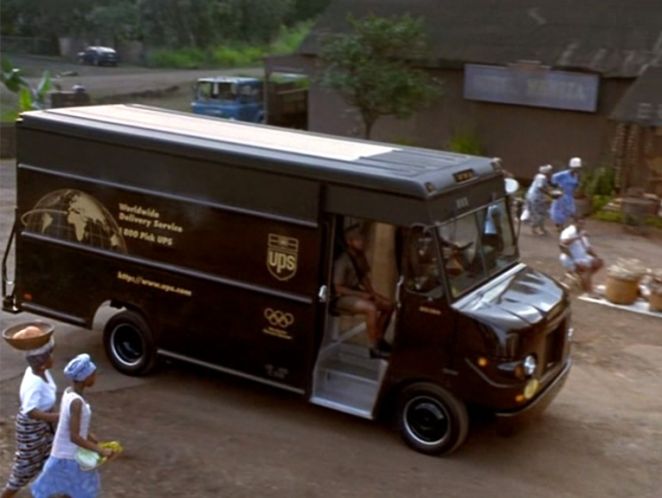
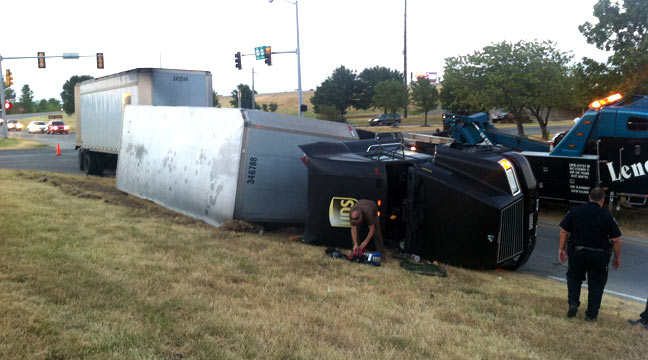
The award goes to those who manage to drive their big brown trucks without having an “avoidable” accident, for years and years. That isn’t easy since UPS considers nearly every kind of accident avoidable. A scratch on the truck while backing up, or a tree branch hitting the vehicle and breaking a mirror, they both count as accidents that might have been avoided.

Drivers who make it through 25 years are honored with a little ceremony, a patch on their sleeve documenting the number of accident-free years and the ultimate king-of-the-road status symbol: a bomber jacket.

UPS is driven by its safety culture. New drivers at the 107-year-old company are required to attend intensive, weeklong training courses, informally dubbed “Quaker boot camps” that emphasize ethics and safety.

It isn’t the only company to toot its horn for safe drivers. PepsiCo Inc.’s Frito-Lay honors its million-mile safe drivers at an annual awards gala at its headquarters in Plano, Texas. The achievement typically takes 12 years. Con-way Inc., in Ann Arbor, Mich., bestows a class ring on its two-million-milers, who also get an embroidered jacket and business cards. Waste Pro USA Inc., in Longwood, Fla., awards its garbage truck drivers $10,000 for three years of spotless work. Spotless has three components: a positive attitude, good attendance and no accidents. UPS-rival FedEx Corp. gives awards too, recognizing employees after each year of safe driving.

For UPS drivers, the road to glory is very hard. UPS drivers must memorize the company’s more than 600 mandatory “methods.” These include checking the mirrors every five to eight seconds, leaving precisely one full car length in front when stopping and honking the horn just so: two short friendly taps, no blasting.

There are all sorts of potential hazards. In Ketchikan, Alaska, for instance, Tom Fowler, 53, dodges black bears and deer on a regular basis. In the snow and ice, he parks, then pulls a sled of packages a quarter mile up narrow roads on steep, slick hillsides to avoid the possibility of a vehicle accident. He became the first Alaskan driver to make the circle of honor in January.

“When you’re out delivering, it’s not unusual to see bears, black bears. People do hit ’em,” Mr. Fowler said. It’s “a big crash if you hit a bear.”

About 1,500 were inducted into the circle in 2013, and a mere 7% of the 102,000 UPS drivers on the road are members.

Drivers agree the most impressive record belongs to Ronnie McKnight, who has driven safely for 46 years in New York City, dodging aggressive taxi drivers and parking precariously on a daily basis. Mr. McKnight, 71, learned to drive slowly on a tractor at age 11. Now, he says, his secret is “patience. Don’t be in any rush to do anything.”

Lately, UPS actually has been pushing its drivers to speed up, while still adhering to the rules. Thanks to the boom in e-commerce, drivers say they’re delivering more packages than ever on the same routes. Average daily package volume has grown 12% over the past five years, while the number of drivers has stayed roughly the same, according to the company. Some drivers complain privately that the company’s expectations for safety and efficiency can be contradictory. “The job can be done as efficiently as we’ve designed it, and safely, if you follow the methods,” says UPS spokesman Dan McMackin, who used to be a driver.

Tom Camp, 73, is the company record holder for 51 years of safe driving—in Michigan, of all places, a state snow- and icebound several months of the year. He has no plans to retire. “Every day is a challenge out there,” he says. “It takes your full concentration, all the time.”

Still, it’s all too easy to hit a bump in the road—or a chain-link fence. That’s what happened to Rui Sousa, a 49-year-old Providence, R.I., driver as he tried to turn around at the end of a dead-end street in 2003. He scratched his vehicle and wiped out a perfect 15-year, six-month-record. His heart sank.

“It’s hard to swallow when you go that many years and then, boom, there it all goes,” he said.

Luckily, UPS allows for detours. If a driver has an accident after five years of safe driving, the clock is set back by at least a year, but the previously accumulated years still count toward the final tally. Before five years, drivers go back to zero.

Mr. Sousa was set back by 18 months. He now takes extra care when backing up, often getting out of the vehicle to check whether he has enough space.

In October, after another 10 years of safe driving, he finally made it to 25 years. He now parks in a reserved front-row spot at his building. As part of the award ceremony, his brown jersey was retired to the rafters of the building, where it dangles as inspiration for younger drivers with a dozen others. He now has a new shirt with a small, round sleeve patch with the number 25 on it.

Drivers have a choice between a camel-hair blazer and a leather bomber jacket as their prize. Mr. Sousa chose the bomber jacket. “I wear it on special occasions,” he says. People “think it’s very cool.”

laura.stevens@wsj.com

A man without a country

If you were going to suggest a cast for a reality show about life in the suburbs, you might pick Nick Ortega and his family. His house in Loveland is the stereotypic American dream: two-car garage, neatly trimmed lawn and family pictures in every corner of the living room. Downstairs, in the basement, you’ll find Ortega’s “man cave,” a couch facing a big screen TV, a foosball table and a couple of guitars from Ortega’s rock band days in the 1990s.

There are pictures of Ortega when he was a kid on a baseball team, and photos of his son’s team with Ortega standing to one side as coach.

Beyond this slice of Americana is the “living nightmare” that Ortega has yet to tell his neighbors about.

After more than four decades in Colorado, Ortega was shocked to learn that he’s not an American citizen, as his parents had always told him.

“I still wake up and can’t believe it,” he says.

He’s worked for decades in the United States without any problem. He’s filed income taxes since 1983. He has a driver’s license. He bought a house. For two decades he has lived with his common-law wife, a multigenerational U.S. citizen from Montana. Both of his children are citizens.

Ortega may have never found out he wasn’t a citizen if United Parcel Service, his employer of more than a decade, had not in 2010 run his name and the names of his coworkers through E-verify, the Department of Homeland Security’s internet-based system for determining whether employees are eligible to work in the United States. UPS told Ortega that his Social Security number identified him as someone born outside the country.

“‘That’s strange,’ I said,” says Ortega.

So began a frustrating and emotional journey where Ortega, now 47 years old, began to unravel family secrets that nobody had ever told him.

“My parents just never talked much about the past,” he says. “It was very difficult to get answers out of them.”

Eventually, he did. Ortega discovered that he was born in Mexico in November of 1966. That made him a year older than he’d always been told. He learned that he migrated from Chihuahua, Mexico to the United States with his mother and siblings in 1972 around the age of five. They traveled on a bus that was waved through a U.S. border checkpoint in El Paso. From there, the family traveled to Colorado to be with Ortega’s father, a Texas-born U.S. citizen from a family with a long tradition of farm laboring. Ortega has been in the United States ever since.

His upbringing in Greeley, Colo., was modest. His family was poor, working hard for subsistence wages. After he graduated from high school, Ortega did some construction as well as gigs with his rock band. He settled into a job at a rent-to-own store and later worked several years for a furniture sales ware house. One day, he set his sights on a job that would provide a more secure foundation for his family — driving a truck for UPS. He began as a seasonal driver, but worked constantly, punching the overtime clock every time his managers said there were extra hours to fill.

“I knew there were a lot of drivers who wanted to go full time, so I made myself stand out by working the hardest,” he says.

It paid off. He was hired as a regular driver with benefits, joined the Teamsters Union and over the years steadily inched his way up to a payday of about $90,000 a year. He shows a stack of honors he received from UPS, including nearly a decade of safe driving awards and honors for “Total Quality Service.”

When the news came that UPS was letting him go, Ortega was devastated.

“It was like my whole world was crumbling around me,” he says.

Only a handful of states require E-verify checks as mandatory for all employers. Colorado is not one of them. In Colorado, only contractors for the state and the city of Denver are required to undergo the checks that critics say may unfairly target workers and can be open to fraud. A Homeland Security Department study found that about half the undocumented workers checked by E-verify were deemed eligible for work.

The Teamsters Union Local 705 in the Chicago area chided UPS for using E-verify to check 340,000 workers around the time Ortega was let go. In the Chicago area, at least 280 employees, including possible U.S. citizens, were reportedly dismissed, according to a statement by the union.

UPS failed to return a request for comment by deadline.

Boulder Weekly

Income gap widens as American factories shut down

Income gap widens as American factories shut down

Once mighty, now a Monopoly property: How manufacturing’s decline widens the wealth gap
Associated Press
By Michael Rubinkam, Associated Press
7 hours ago
Income gap widens as American factories shut down
READING, Pa. (AP) — In August 2008, factory workers David and Barbara Ludwig treated themselves to new cars — David a Dodge pickup, Barbara a sporty Mazda 3. With David making $22 an hour and Barbara $19, they could easily afford the payments.
A month later, Baldwin Hardware, a unit of Stanley Black & Decker Corp., announced layoffs at the Reading plant where they both worked. David was unemployed for 20 months before finding a janitor job that paid $10 an hour, less than half his previous wage. Barbara hung on, but she, too, lost her shipping-dock job of 26 years as Black & Decker shifted production to Mexico. Now she cleans houses for $10 an hour while looking for something permanent.
They still have the cars. The other trappings of their middle-class lifestyle? In the rear-view mirror.
The downfall of manufacturing in the U.S. has done more than displace workers and leave communities searching for ways to rebuild devastated economies. In Reading and other American factory towns, manufacturing’s decline is a key factor in the widening income gap between the rich and everyone else, as people like the Ludwigs have been forced into far lower-paying work.
It’s not that there’s a lack of jobs, but gains often come at either the highest end of the wage spectrum — or the lowest.
“A loss of manufacturing has contributed to the decline of the middle class,” said Howard Wial, an economist with the Brookings Institution and the University of Illinois at Chicago. “People who are displaced from high-paying manufacturing jobs spend a long time unemployed, and when they take other jobs, those jobs generally pay substantially less.”
Globalization, automation and recession destroyed nearly 6 million manufacturing jobs between 2000 and 2009. In Pennsylvania, between 2001 and 2011, 258,000 middle-income factory jobs were lost. At the same time, Pennsylvania added jobs at the lower end of the wage spectrum — in health care and social services — and at the highest end, in sectors like management and finance.
Berks County, of which Reading (pronounced REH’-ding) is the county seat, is a mirror of that larger problem.
Decades ago, Reading was a mighty manufacturing town where the Reading Railroad — once the world’s largest company, now a spot on the Monopoly board — built a 19th-century transportation empire, and factories produced everything from hats to hardware. At one time, the city boasted so many manufacturing jobs that you could quit one, cross the street and easily land another, longtime residents say.
“You made a very, very good middle-class living. You could get a new car every couple years, send kids to college,” recalled Ed McCann, Berks County’s longtime director of workforce development.
Honda automotive engine plant in Anna, Ohio
An associate is seen working in the connecting rod area during a tour of the Honda automotive engine …
Then the factories shut down. The wealthy fled to the suburbs, their grand Gilded Age mansions carved up into apartments, and poor immigrants moved in. Now Reading, population 88,000, is one of the nation’s neediest cities, with more than 40 percent of its residents living in poverty, up from 19 percent in 1990.
As poverty grew, so too did the gap between the rich and everyone else. The difference between the income earned by the wealthiest 5 percent in Berks County and by a median-income household rose 13.2 percent in 20 years, according to the U.S. Census Bureau. Nationally, the wealth gap became even more pronounced, increasing 15.8 percent.
Six years after David Ludwig lost his factory job, the couple have exhausted their retirement savings. They don’t go out to eat or spend on their grandchildren.
Barbara, 56, said she has applied for more than 200 jobs since January and gotten one offer, as a shipping clerk, for $7.50 an hour. She has lost 40 pounds, blaming it on the stress.
“I don’t mind wearing the big baggy clothes, but just to put money aside to buy one or two bras because I lost too much weight, I couldn’t even do that. It sounds silly, but it’s true,” she said.
The toll can also be seen at the Greater Berks Food Bank. It distributed 7.2 million pounds last year, up from 2.5 million pounds in 2001, and the food bank plans to move into a larger building to accommodate the surging demand.
The latest wave of plant closures, beginning around the turn of the millennium, hit companies like Dana Corp., Agere Systems, Luden’s, Glidden and Baldwin Hardware. Some 9,300 jobs evaporated between 2001 and 2011 — nearly a quarter of Berks County’s manufacturing base, according to Penn State economists Theodore Alter and Theodore Fuller. They were replaced by jobs in lower-wage sectors like education and especially health care, a phenomenon that has played out around the state and nation.
“The manufacturing sector was decimated, and the people who had those skills had no place to go,” said Karen Rightmire, a longtime United Way official who now runs the Wyomissing Foundation, a private philanthropy outside Reading. “The days of the factory job that just required a strong back are gone.”
Nationally, manufacturing declines accounted for 40 percent of the increase in joblessness from 2000-2011, according to labor economist Erik Hurst. And the middle class was hit hardest.
For high-income college graduates, “It doesn’t look like there was a recession,” said Hurst, of the University of Chicago. “For lower-skilled (manufacturing) workers, the recession comes along, you get a big decline in employment, and it hasn’t rebounded at all.”
The jobs picture isn’t entirely dark. Manufacturing is still the No. 1 employer in Berks County, led by battery maker East Penn Manufacturing Co. and a specialty steel company. Economic development officials say they’ve seen a recent uptick in factory hiring, and graduates of local technical career programs are virtually guaranteed a job. Berks County has placed a huge bet on worker training, launching a “Career in 2 Years” marketing campaign that encourages people to become certified in high-skilled manufacturing fields like precision machining and robotics.
But not everyone has the aptitude or desire.
Vicki Henshaw serves on a rapid-response team that helps laid-off factory workers. She said they are typically older, with high school diplomas and outdated skills.
“You know the struggle they are going to have to even come close to the wage they were receiving,” said Henshaw, executive director of labor-affiliated United Community Services in Reading. “You look at them and you feel the despair. Their lives are now in utter turmoil.”
While the manufacturing picture has brightened a bit nationally — with the U.S. adding hundreds of thousands of jobs in recent years — it’s an open question whether the sector is truly making a comeback or the gains are merely cyclical following the recession.
Brian Waldbiesser, for one, isn’t betting on a manufacturing renaissance.
The 41-year-old father of two saw little choice but to go back to school after losing his $19.50-an-hour job at battery maker Exide Technologies, where he had put in 19 years. After a year of unemployment, he is struggling to pay the bills, and he no longer considers himself middle class.
Waldbiesser, who has tapped a federal program for workers hurt by foreign competition, is studying psychology — and psyching himself up for better times.
“I don’t want this to be a sob story about me,” he said. “What I would like for people to take from my story is that even though I am struggling, and it is radically different from where I was, if you seize the opportunities that are in front of you, there are opportunities out there to better yourself.”

UPS driver information