I’ve heard everything now

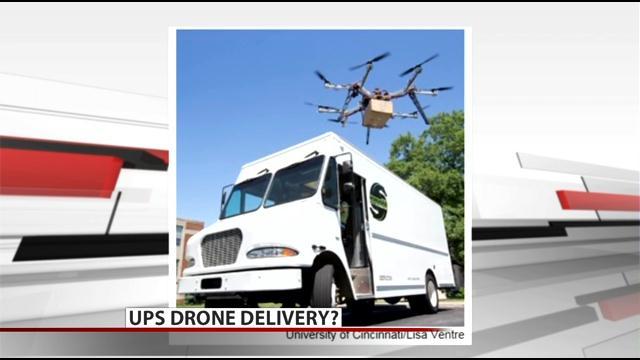
UPS orders 18 new electric delivery trucks equipped for drones

LOUISVILLE, Ky. (WDRB) — UPS delivery is going to new and illegal (for now) heights.

According to our partners at Business First, the shipping giant ordered 18 new electric delivery trucks. But these trucks — purchased for its Houston market — also have room for a drone on the top of the truck.

If drones are approved by the FAA, UPS will be able to hand off packages to drones to be delivered.

The Ohio company that makes the trucks says they cost 30-cents per-mile to run — that’s compared to a dollar a mile with gas and maintenance in a regular truck.
006693153_G

Are you kidding me?

Deadly ecstasy alert: Experts warn super-strength UPS tablets are flooding streets of Glasgow

0098c1e940cb1ce856feb78b206f6a5996


DEADLY tablets said to be 10 times the strength of normal ecstasy are flooding Glasgow, experts warn.

The yellow party pills, stamped with a UPS logo, are still being sold by dealers despite knowing the dangers.

The drugs are thought to be responsible for the hospitalisation of six clubbers in Middlesbrough at the weekend.

Tests have found UPS pills, which are believed to originate in Switzerland, contain up to 275mg of MDMA, compared to other tablets circulating in Glasgow which contain around 35mg.

Research carried out by a European charity reveals the super-strength batch of the UPS party drug is “neurotoxic and increases the likelihood of irreparable brain damage”, according to a report by the Evening Times.

A source told the paper: “We have some intelligence that yellow UPS tablets are on sale in Glasgow.

“It doesn’t matter whether it’s yellow UPS, pink Superman or green Rolex tablets, you don’t know what is in them.

“They simply are not safe.”

The Scottish Drugs Forum posted a warning about the potent batch of ecstasy.

It said: “UPS ecstasy circulating in some parts of Scotland.”

Daily Record

We the People, Not We the Corporations

On January 21, 2010, with its ruling in Citizens United v. Federal Election Commission, the Supreme Court ruled that corporations are persons, entitled by the U.S. Constitution to buy elections and run our government. Human beings are people; corporations are legal fictions.

We, the People of the United States of America, reject the U.S. Supreme Court’s ruling in Citizens United and other related cases, and move to amend our Constitution to firmly establish that money is not speech, and that human beings, not corporations, are persons entitled to constitutional rights.

The Supreme Court is misguided in principle, and wrong on the law. In a democracy, the people rule.

We Move to Amend.

“. . . corporations have no consciences, no beliefs, no feelings, no thoughts, no desires. Corporations help structure and facilitate the activities of human beings, to be sure, and their ‘personhood’ often serves as a useful legal fiction. But they are not themselves members of “We the People” by whom and for whom our Constitution was established.”

~Supreme Court Justice Stevens, January 2010

If This Case Heads to the Supreme Court, Unions Could Be Over

By Joseph Williams | Takepart.com


For years, Rebecca Friedrichs, a veteran teacher in Buena Park, California, a suburb of Los Angeles, had monthly union dues docked from her paycheck, even though she didn’t like the union’s positions on school choice and other education reforms. What she theoretically got in return—collective bargaining for pay raises, benefits, and job security that comes with representation by one of the most powerful unions in her profession—wasn’t a selling point; her three years as a full-fledged board member, trying to work within the system, was more frustrating than empowering.

That’s why, in a real-world civics lesson, this week she and nine other teachers petitioned the U.S. Supreme Court to hear their arguments against the law and overturn it.

More is at stake than just the $600 to $1,000 Friedrichs and her colleagues paid in union dues each year. If the court agrees with them and overturns the law, the ruling would deal a crippling blow not only to the 295,000-member California Teachers Association but also to the national organized-labor movement; 26 states have similar laws for public-employee unions.

Friedrichs believes teachers should have the freedom to decide for themselves if they’ll join the union, especially if its positions cut against what she thinks most teachers want.

“When unions use our dues money to block sensible reform and protect teachers who clearly do not belong in the classroom, it’s time to say enough is enough,” Friedrichs said in a statement .

At issue is California’s “agency shop” law, which forces members of a unionized profession to pay dues even if they don’t support or have membership in the union. Teachers in California can opt out of paying CTA dues spent on political efforts, like lobbying, by asking for a refund, but they can’t opt out of dues used for collective bargaining.

Friedrich and her colleagues, however, argue that the opt-out process is so complex they end up contributing hundreds of dollars to political activities with which they disagreed.

“The gist [of the petition] is claiming that compulsory union dues violates the First Amendment right for employees to decide for themselves what causes to support,” said Terry Pell, president of Center for Individual Rights. The conservative-leaning organization is backing Friedrichs and her co-plaintiffs, along with Christian Educators Association International, in the court challenge.

“We’re not challenging the union’s authority to be the collective bargaining agent” for teachers, and CTA could still do that even if the Supreme Court ruled against it, Pell said. The problem, he said, is CTA takes “very political positions” on education issues—school choice, for example, or teacher tenure—that some of its members don’t like and spends dues backing partisan election campaigns.

“The First Amendment doesn’t allow the state to compel speech. It can’t force individuals to speak out, and it can’t prevent individuals from speaking when they do want to speak,” Pell said. “The only question is whether the union fairly and accurately represents the interest of its members.”

The high court has heard a case like this before. Last year, the justices ruled on Harris v. Quinn, which challenged Illinois’ version of California’s “agency shop” law. The court upheld the Illinois law, but just barely: It declared unions couldn’t collect dues from employees who didn’t want to join and signaled it was open to another, more focused challenge to the law.

Last year, a federal court in California rejected Friedrichs’ lawsuit against the CTA, setting up the Supreme Court appeal. In a statement afterward, union president Dean E. Vogel praised the ruling and, referencing the Quinn decision, said his organization works tirelessly to improve working conditions for all teachers, even nonmembers.

“Because nonmembers benefit from this work to ensure they have quality teaching and learning conditions, the U.S. Supreme Court has repeatedly ruled it is only fair that they contribute toward these expenses,” he said. “We are confident that this attempt by forces to use the courts to gravely diminish the voices of CTA and other unions will not succeed if appealed, as we expect this case will be.”

Nevertheless, if the law is overturned, it would be a devastating, if ironic, strike against the labor movement at a time when income inequality is a hot topic among politicians in Washington.

Statistics show that unions helped build and sustain the middle class. As membership increased in the early part of last century, wages for all workers climbed upward. Yet as right-to-work laws have been enacted across the nation over the last few decades, union membership has dropped, and overall wages for American workers have barely kept pace with inflation or even have declined.

Friedrichs believes a greater principle is at stake.

“At the turn of the 20th century, unions provided a collective voice for the good of employees, but today, many employees feel trapped within public sector unions,” she wrote in an editorial letter published in the Orange County Register last summer. “The California Teachers Association has gotten so out of touch that union officials bully teachers (like the plaintiffs in our case) who dare to question union politics and policies.”

If the Supreme Court takes the Friedrichs case, Pell said, it will likely schedule it for the term beginning in October. A decision would likely be handed down by June 2016, and he’s optimistic the justices would see things their way.

Still, “you never know what the court will do,” said Pell, “until it does it.”

UPS driver information